
How to Duplicate Posts and Pages in WordPress
From this tutorial, you will learn how to duplicate WordPress pages, posts, custom post type posts, and CCT items while preserving their formatting and settings.
Need to copy a post or page? Want to update old content? Unfortunately, if you copy the text of this page or post, the formatting and settings will not be preserved. You are just transferring text.
When your aim is to save, for example, design, comments, metadata, or SEO settings, the post or page should be duplicated. This article focuses on the available ways to duplicate content on the WordPress site, paying specific attention to the content created with the JetEngine plugin.
Duplicating a page or post in WordPress in 2026 is not a complicated process. However, to choose the right way, you need to know your tasks and understand which elements should be preserved.
Generally speaking, there are four ways to copy the content:
- using code;
- with the help of the Gutenberg editor;
- with the help of the Elementor editor;
- with a third-party plugin.
Copying the Content Using Code
This option is the most time- and effort-consuming, but you should consider it in case the other options do not suit you for some reason. So, to duplicate a post or page in WordPress, you follow these steps:
- First, open the page or post you want to duplicate.
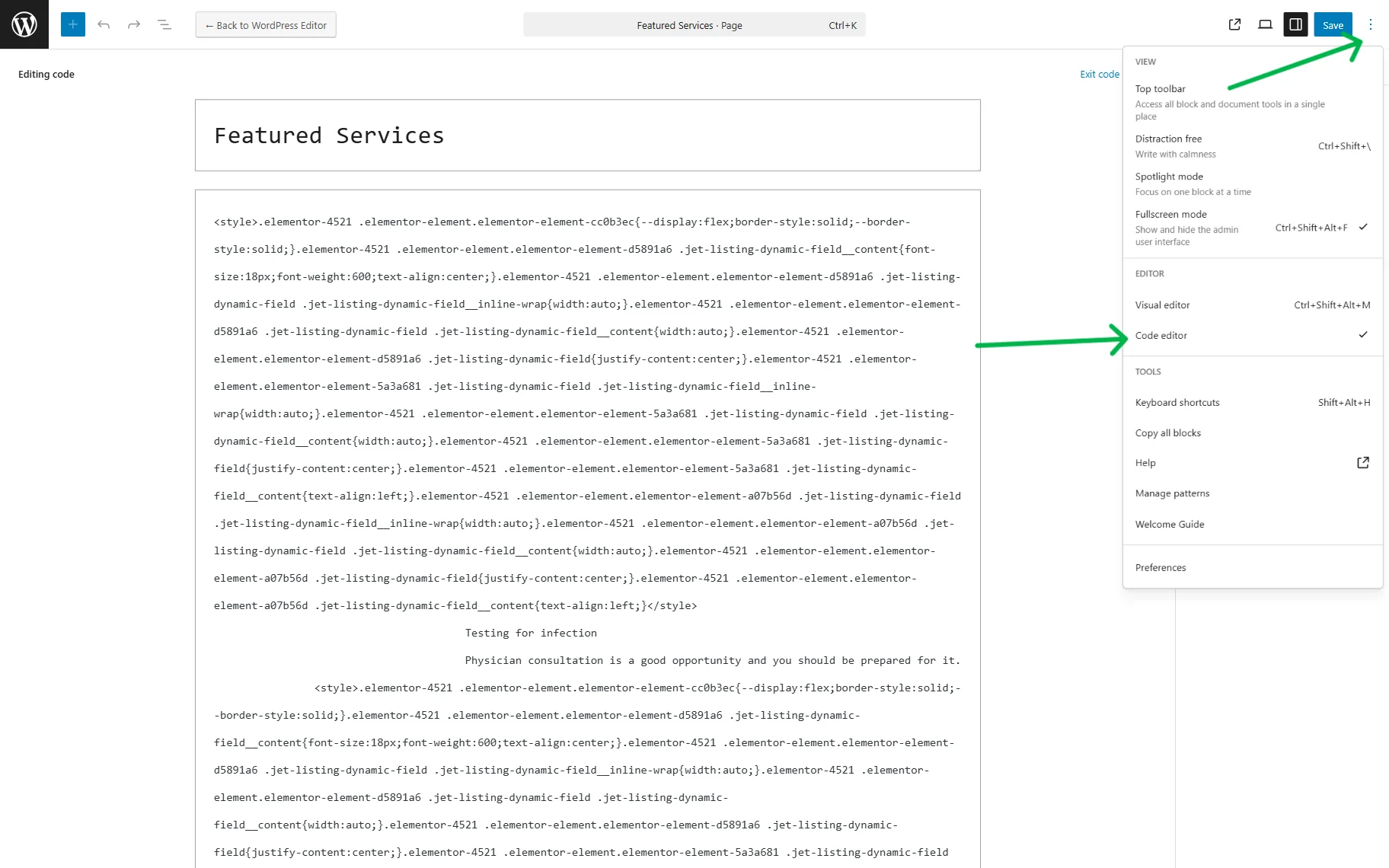
- Click the “three-dots” icon on the top right corner of the page.
- Select the “Code editor” option.
- Copy all the code in this section.
5. Create a new page or post.
6. Enable the code editor in the same way.
7. Paste the copied code.
8. Switch to the visual editor.
9. Click the “Save” button once you are finished.
Thus, you would have a clone of the page or post. Now you can make the necessary changes with no reflection on the original page.
Content Copying with the Gutenberg Editor
Another way to copy the post or page content is to copy it using the Gutenberg editor. To complete the duplication, follow the steps below:
- Open the page or post you want to copy.
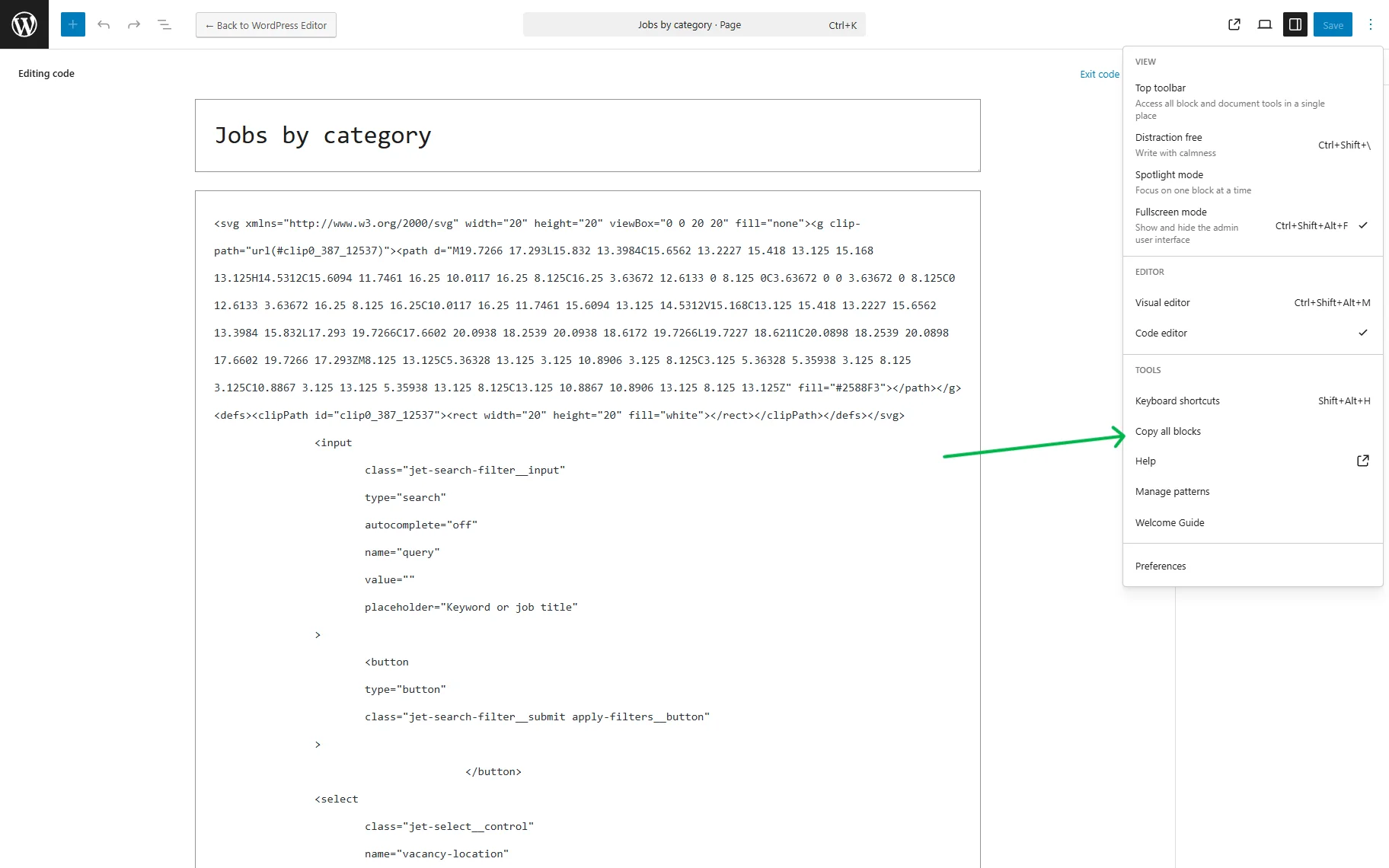
- Click on the “three-dots” icon in the top right corner.
- Press “Copy all blocks” in the Tools section.
4. Create a new post or page.
5. Paste using “Ctrl+V” or right-click on an empty page field and select “Paste.”
Duplicating a Page or Post in Elementor
Elementor gives you full freedom in the page’s design. Sometimes, it needs to be preserved when duplicating. This method is rather connected to using templates than duplicating, but thus, you can use the desired design wherever you need on the site. You can use this method when preserving metadata is not essential to you.
- Go to the page you need to duplicate.
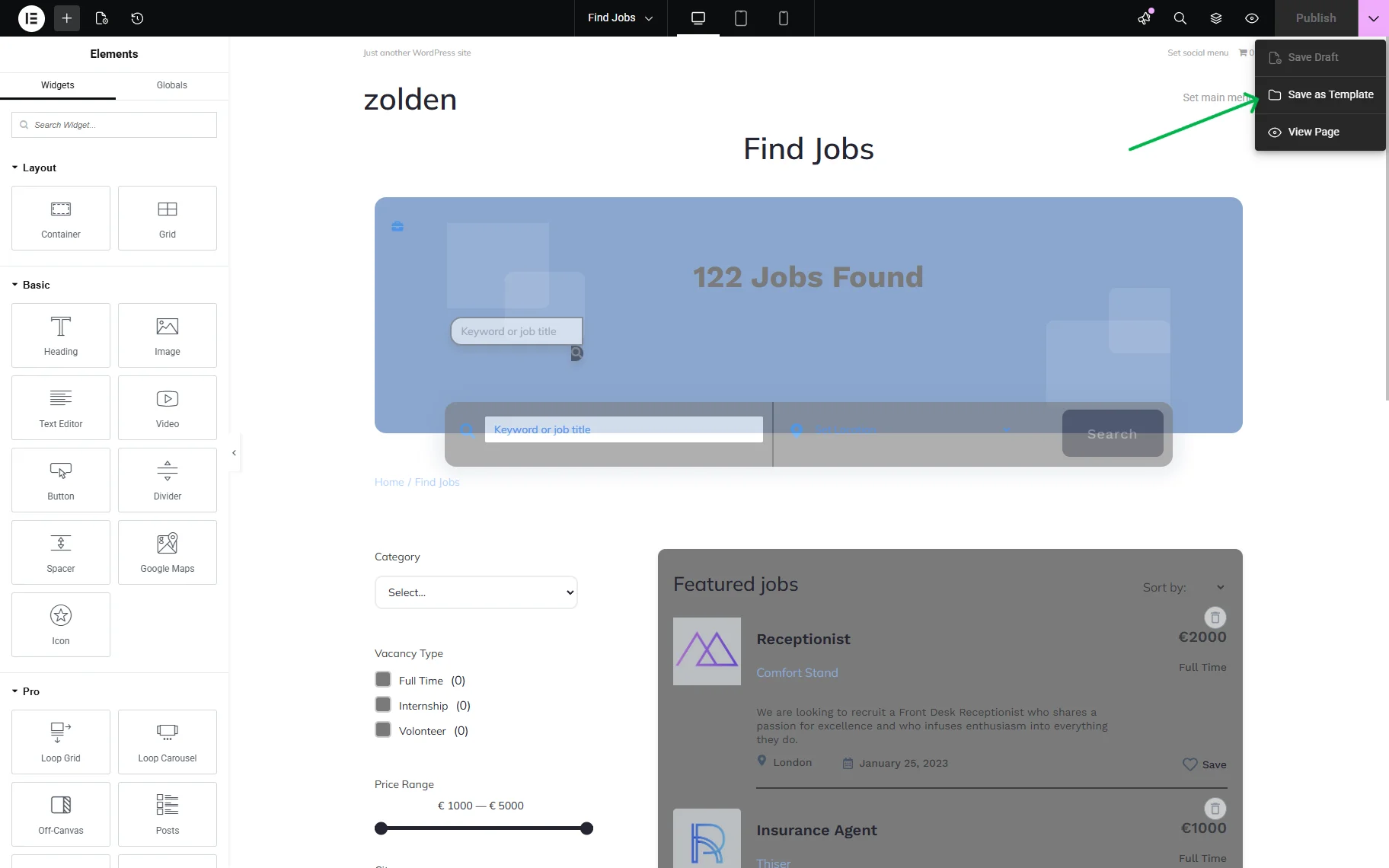
- In the top right corner, next to the “Publish” button, there is an arrow. Click on the right arrow, and options for saving will be opened.
- Select the “Save as Template” option.
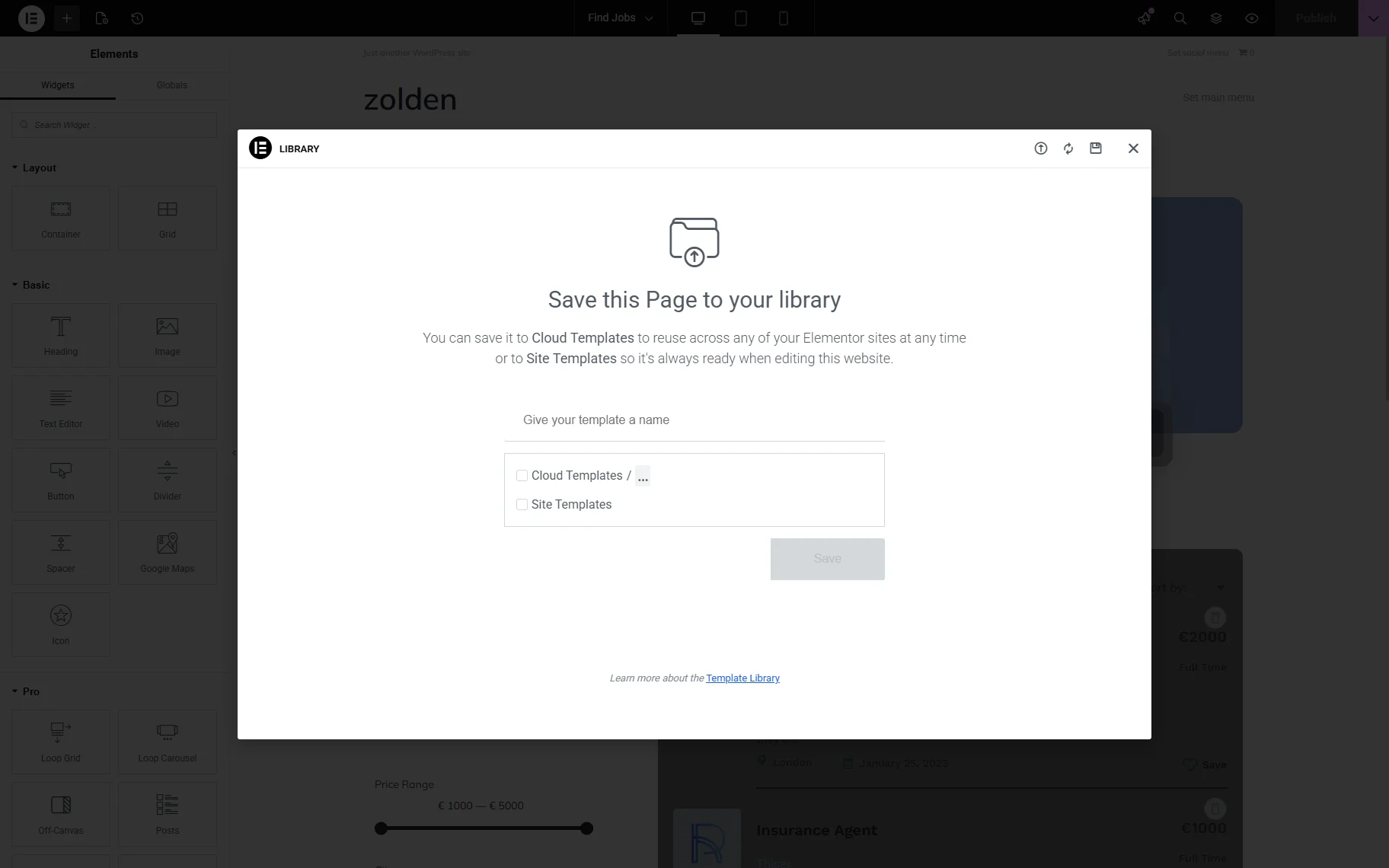
4. Enter the name for the template, select whether you want to keep it in the cloud or site templates, and click the “Save” button.
5. Create a new page.
6. Click on the “folder” icon on the canvas to go to the Elementor library.
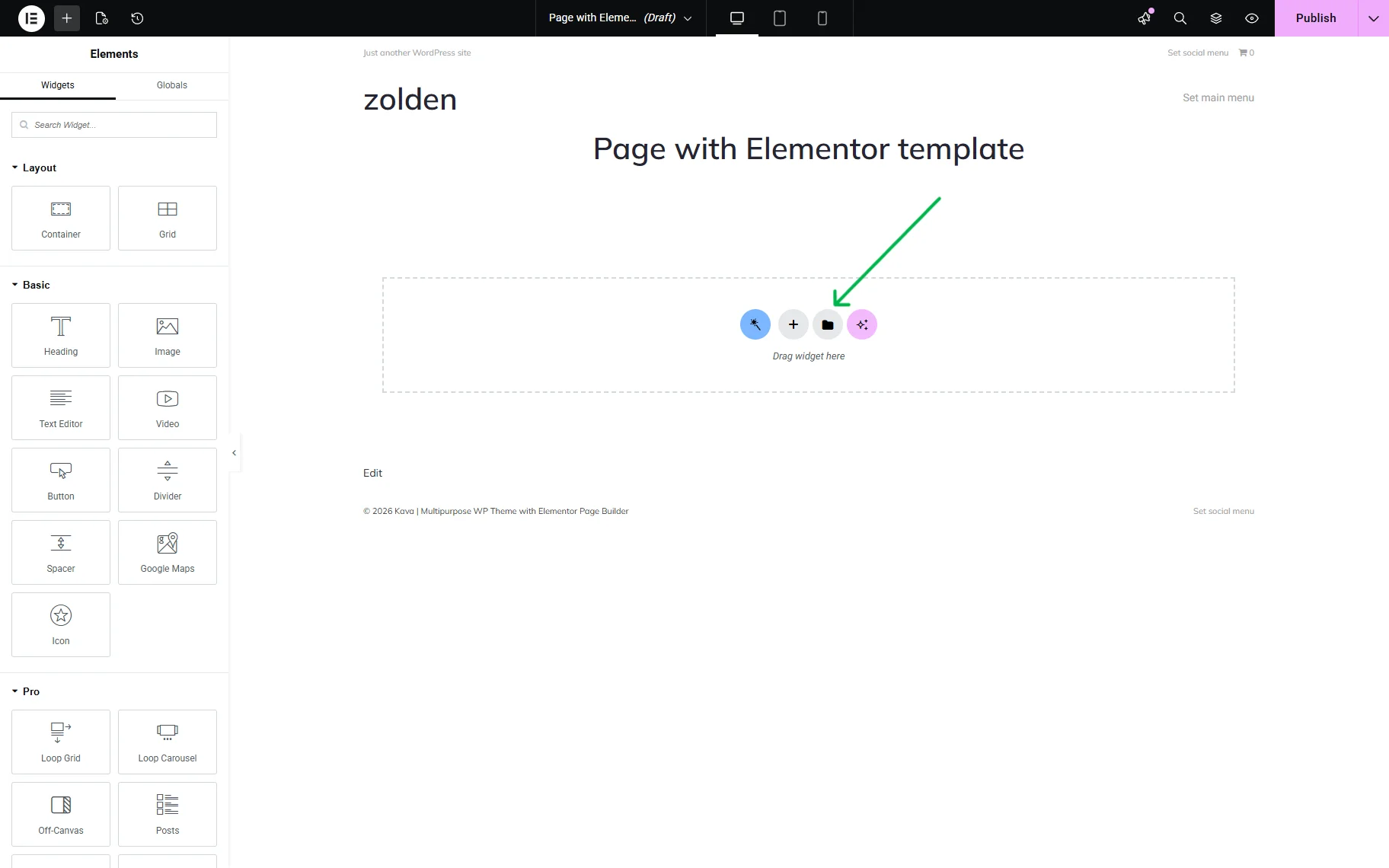
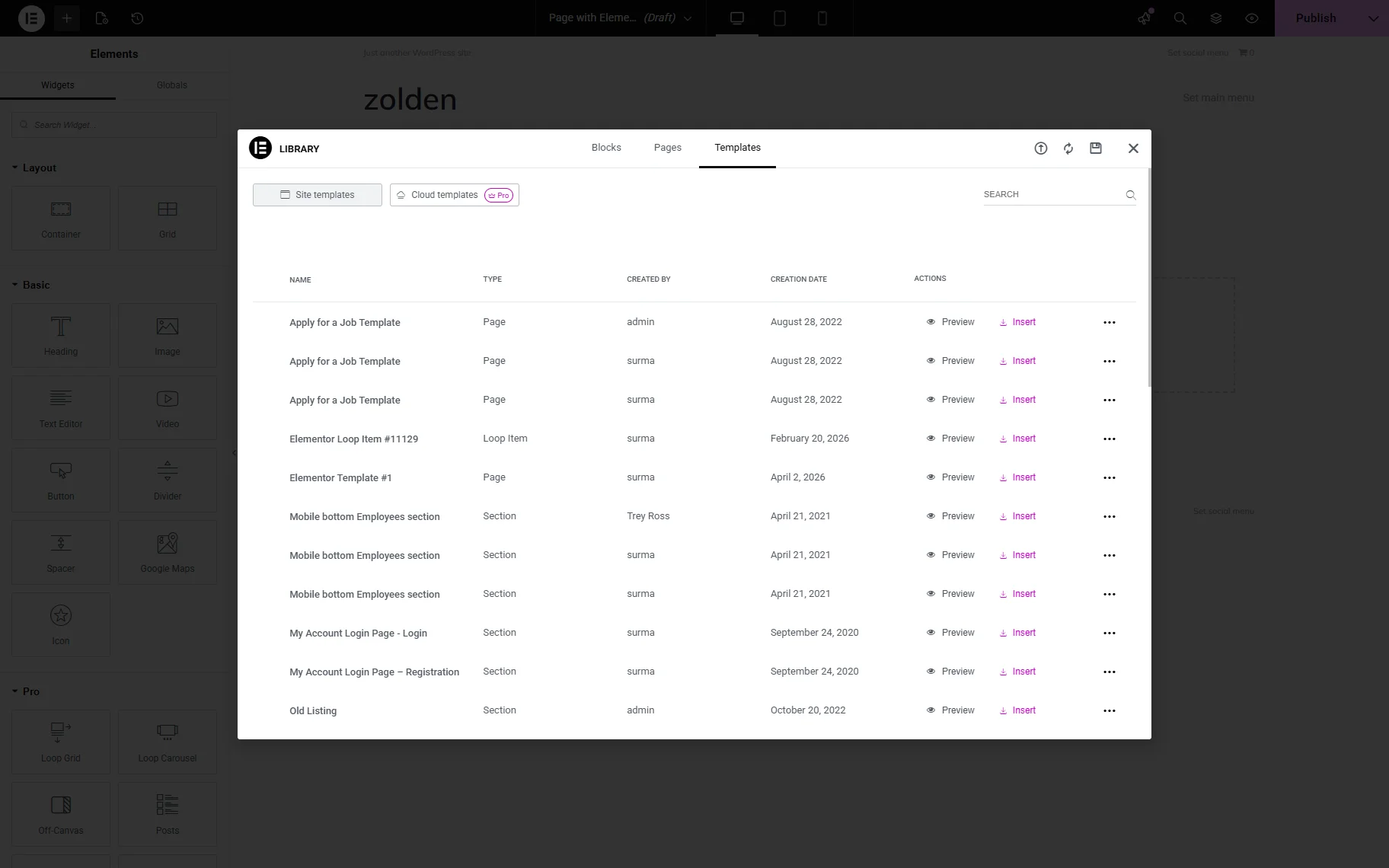
7. Select the Templates tab and Site Templates or Cloud Templates — depends on where you saved the template.
8. Find the needed template and click “Insert.”
Copying the Content with Plugins
As an alternative, you can install and activate third-party plugins for duplicating posts and pages. Let’s focus on the most popular free content-copying WordPress plugins.
Here is a comparison table of the most popular WordPress content-duplicating plugins. We compare their basic features, pricing, and whether they are good choices for beginners or large-scale sites.
| Feature | Yoast Duplicate Post | Duplicate Page and Post | Duplicate Page | Post Duplicator | Smart Manager |
| Type | Dedicated duplicator | Simple duplicator | Lightweight duplicator | Advanced duplicator | Data management tool (not just duplication) |
| Price | Free | Free | Free | Free | Freemium |
| One-click duplication | ✅ | ✅ | ✅ | ✅ | ✅ |
| Bulk duplication | ✅ | ❌ | ❌ | ✅ | ✅ |
| Custom Post Types support | ✅ | Limited | ✅ | ✅ | ✅ |
| Metadata / SEO copy | ✅ | Partial | Partial | ✅ | ✅ |
| Best for beginners | ✅ | ✅ | ✅ | Moderate | ❌ |
| Best for large-scale sites | Moderate | ❌ | ❌ | ✅ | ✅ |
Further, we provide short guidance on how to copy posts and pages with each of the mentioned plugins.
Yoast Duplicate Post
The Yoast Duplicate Post is one of the most popular content duplication plugins. To use it, you need to download and install this free plugin. After that, you will have additional buttons under each post and page in the admin panel: “Clone,”“New Draft,” and “Rewrite&Republish.”
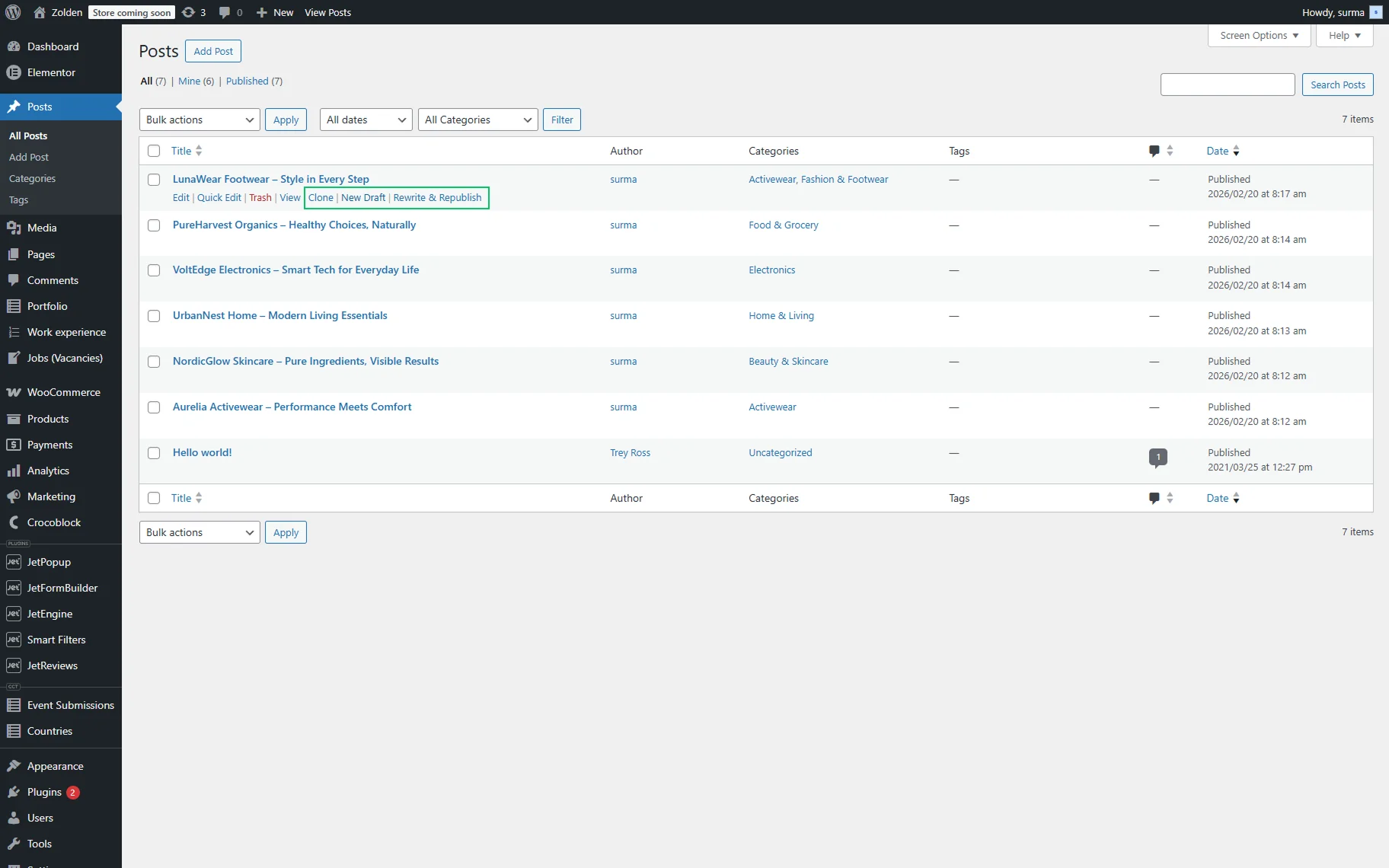
To duplicate content using them, you need to:
- Proceed to the posts or pages you need to duplicate and click the “Clone” button next to the needed post/page. As a result, you will have an exact copy of an existing page or post.
- If you want to edit the content, click “New Draft.” After copying, an editor will open, and you can make changes.
- To update an old post and republish it, click the “Rewrite&Republish” button.
- To duplicate several posts, go to the All Posts or All Pages tab and check the boxes to copy. Then click “Clone.”
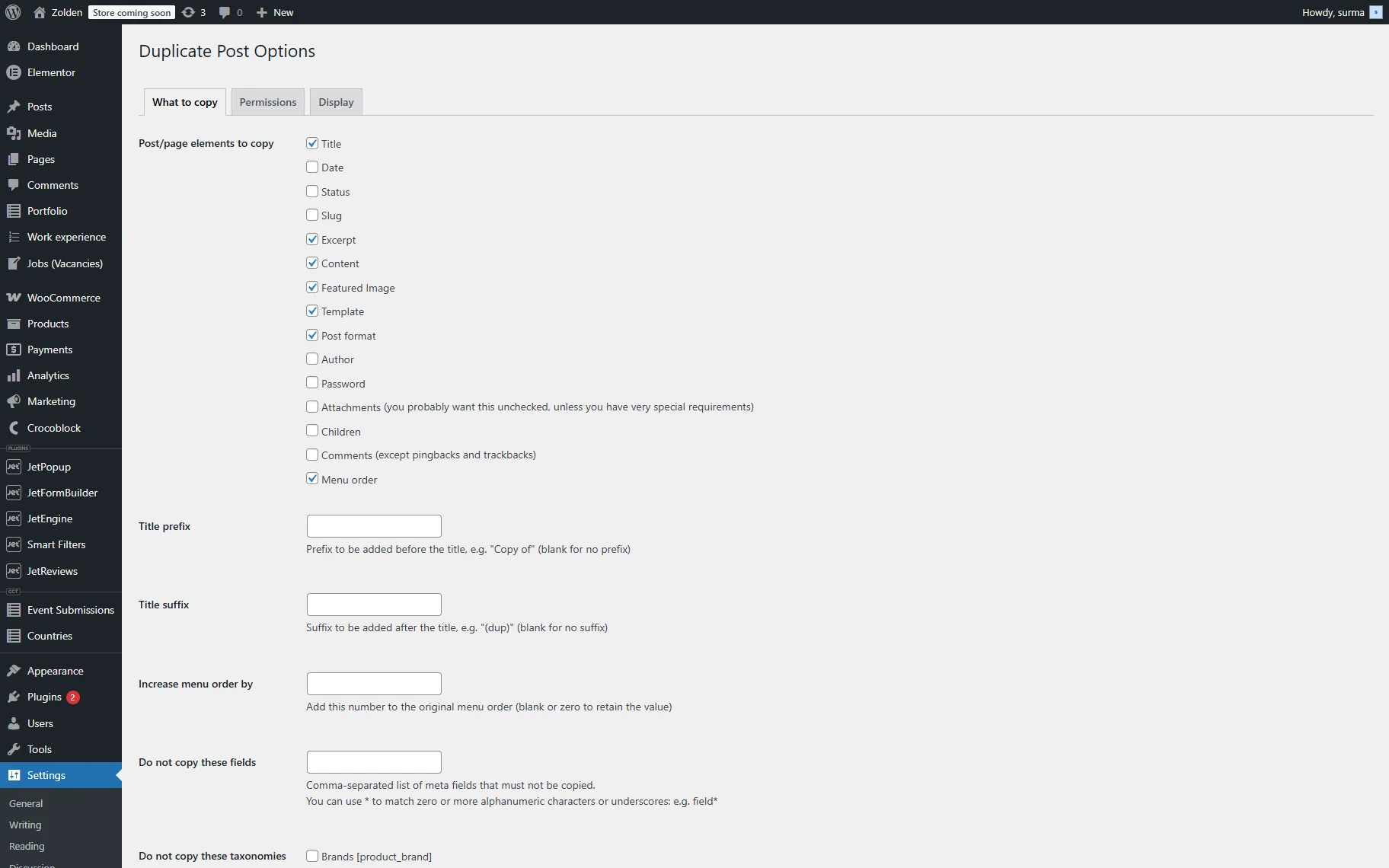
The plugin duplicates your post by default, keeping titles, text, and pictures. However, if you need advanced duplication options (for example, you want to copy text comments), you can customize them. To do this, proceed to Settings > Duplicate Post. In the What to copy tab, check all the required fields and click “Save Changes.”
Duplicate Page and Post
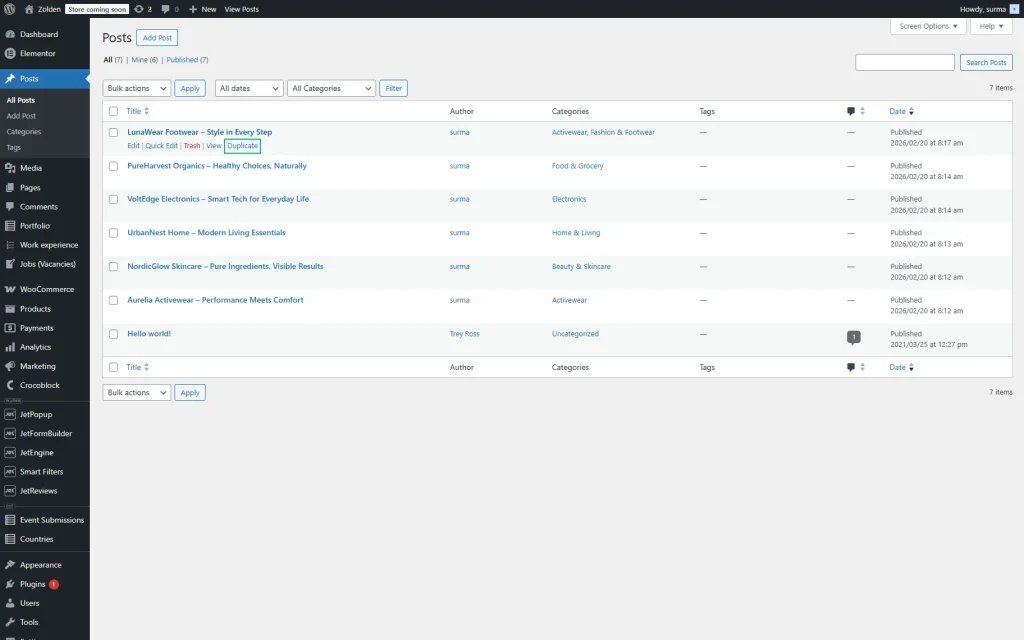
The Duplicate Page and Post plugin is quite popular and straightforward. It adds the “Duplicate” button next to the posts and pages. Just click it to copy the element instantly.
Duplicate Page
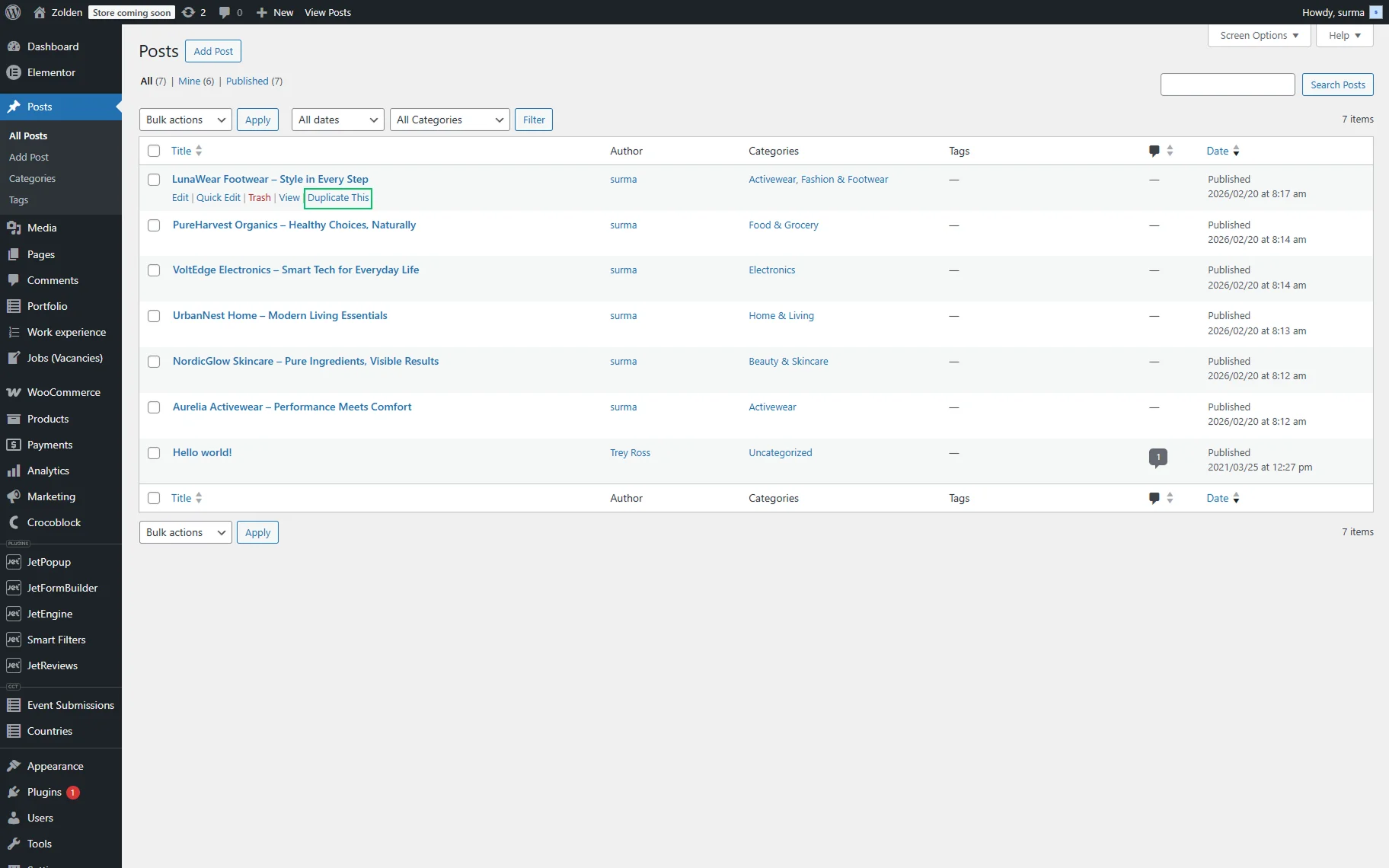
The Duplicate Page plugin allows duplicating not only posts and pages but also Custom Post Types. Once the plugin is downloaded and installed, you can easily make copies. After duplication, the cloned items are saved as drafts, which you can edit or publish immediately.
To make a copy, select the post/page/CPT post you want to duplicate and click the “Duplicate This” button next to it.
Post Duplicator
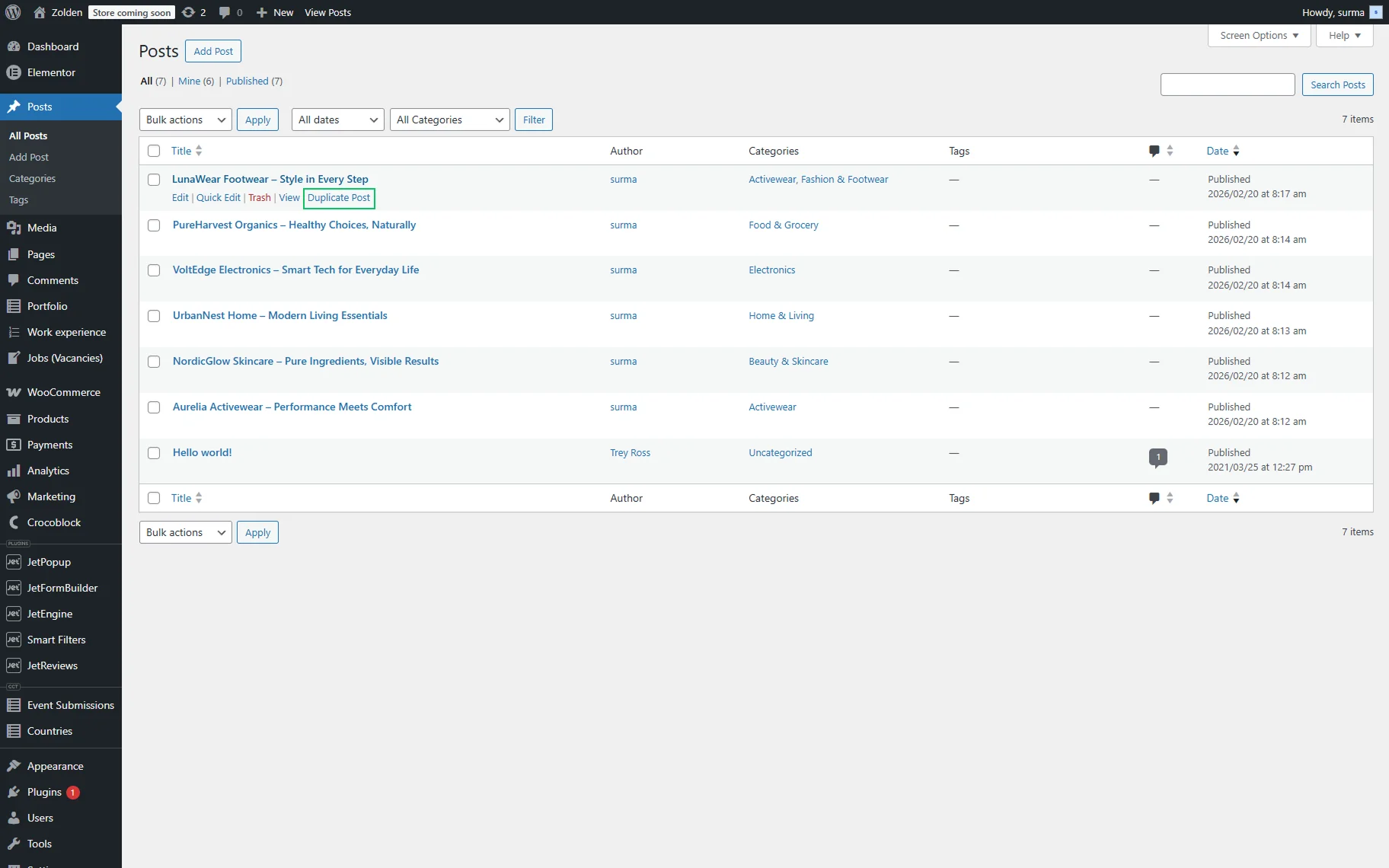
Another available option is the Post Duplicator plugin. It allows you to copy standard posts, pages, or CPTs. This plugin makes it effortless to clone content while preserving all taxonomies, custom fields, and metadata.
The Post Duplicator adds the “Duplicate Post” button.
Smart Manager
The Smart Manager plugin provides wider functionality. Utilize a spreadsheet-style interface to handle and batch modify WooCommerce items, orders, and coupons, alongside WordPress post types, taxonomies, and custom metadata.
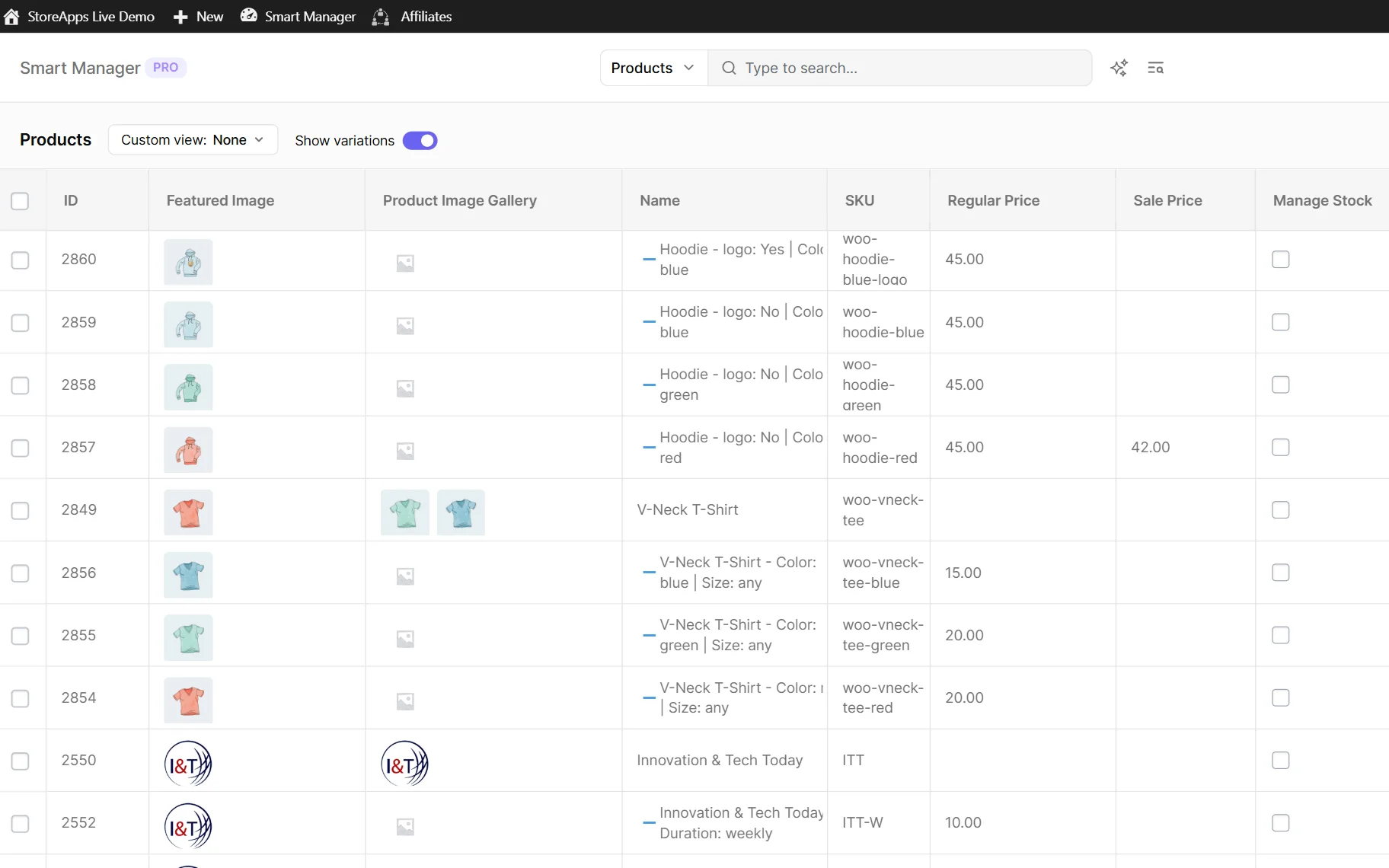
You can duplicate single, multiple, or all your website posts, pages, and other post types. For that, follow these steps:
- Go to your WordPress Admin panel > Smart Manager.
- Select the dashboard from the drop-down – posts, pages, or any other source.
- Tick the checkboxes for the posts you want to duplicate.
- Click the “Duplicate” button.
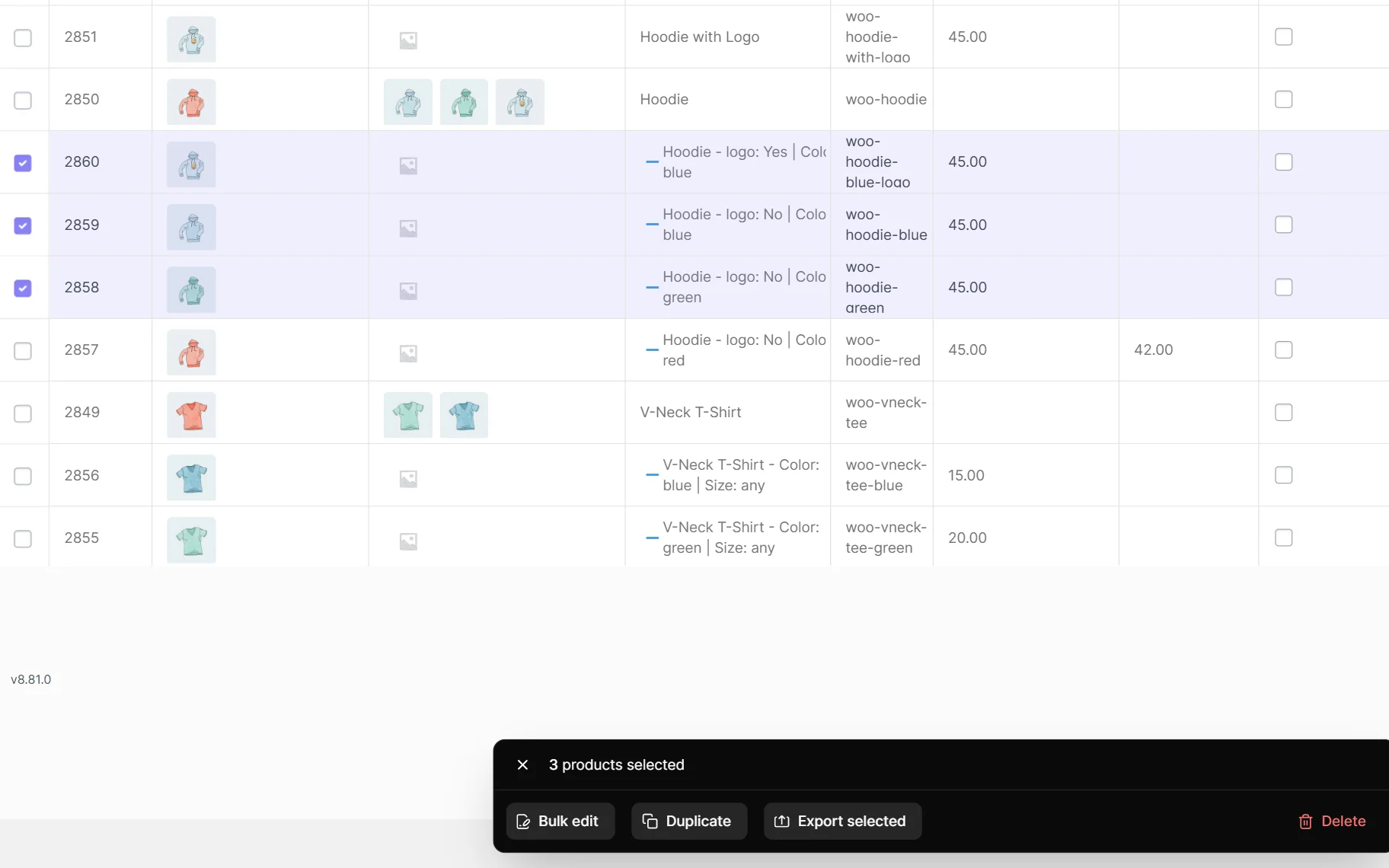
You can also edit, delete, or export selected duplicated records directly in the spreadsheet.
Duplicating Crocoblock Content
The JetEngine plugin allows you to create dynamic content. While Custom Post Types posts and taxonomies can be duplicated with at least one of the methods described earlier, some elements, such as Custom Content Type (CCT) items, Relations, and JetThemeCore’s page templates, require special attention.
Duplicating JetEngine’s CCT items
A CCT item in JetEngine is basically one record inside the custom database structure. CCT items are stored in a separate database table, which is not wp_posts. That is why CCT items are not the posts, and they cannot be duplicated with the help of the standard plugins we discussed before.
Currently, JetEngine offers the built-in functionality for duplicating CCT items. Proceed to the CCT you need, and click the “Clone” button next to the needed CCT item.
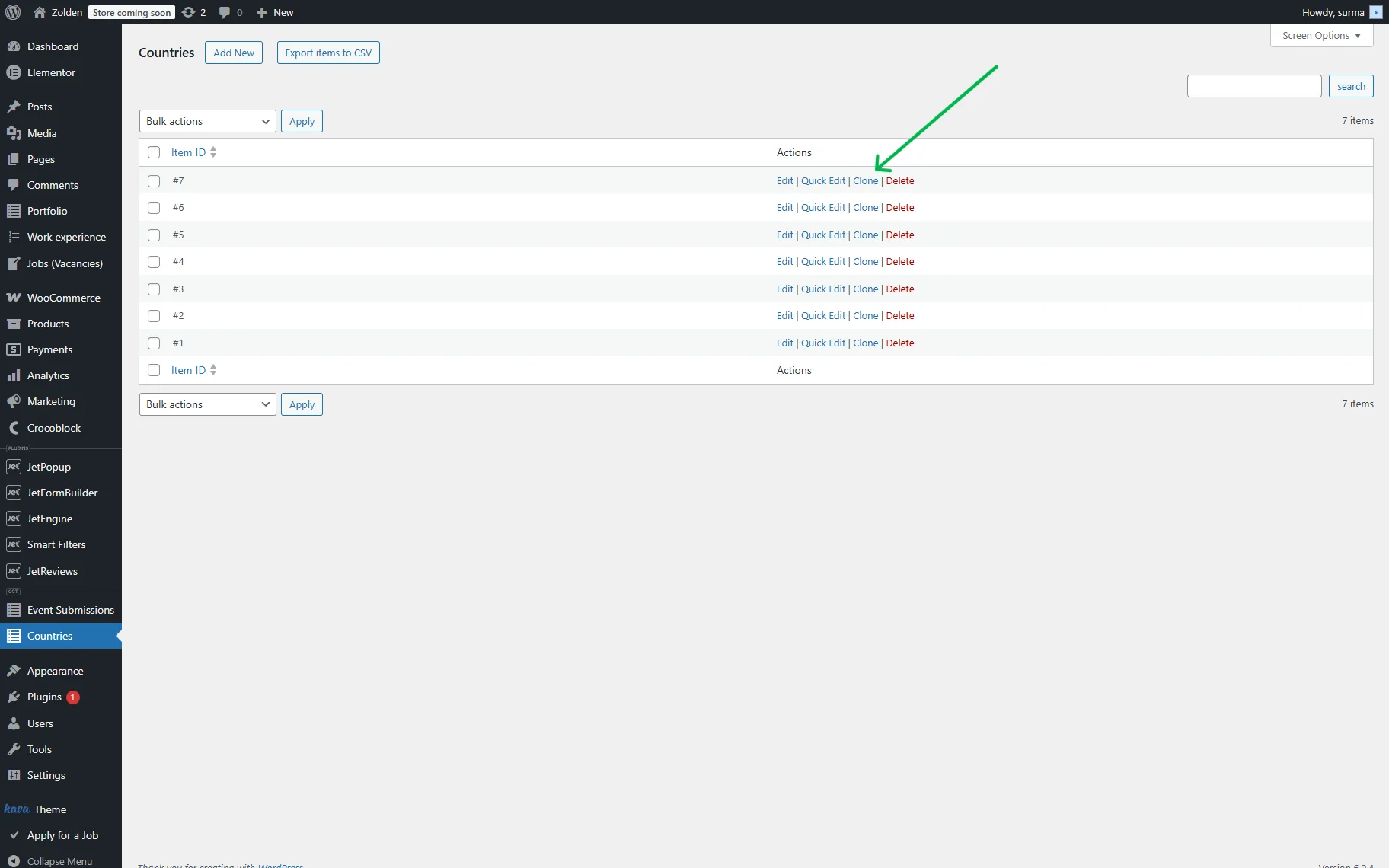
You will be redirected to the newly copied item settings, where you can edit the item and save it.
Clone posts with JetEngine meta fields natively
In most cases, JetEngine’s metadata is duplicated automatically, but it depends on how the data is stored. By default, JetEngine stores meta fields in the standard WordPress database table (wp_postmeta).
In this case, most duplication plugins, such as those we reviewed earlier, will copy:
- the post content;
- the featured image;
- all JetEngine meta fields.
This works because duplication plugins clone the entire post along with its associated metadata.
So, if you are using default settings, no additional configuration is required — JetEngine meta fields will be duplicated together with the post.
However, if the Custom Meta Storage option is enabled in JetEngine’s Post Type, the situation changes.
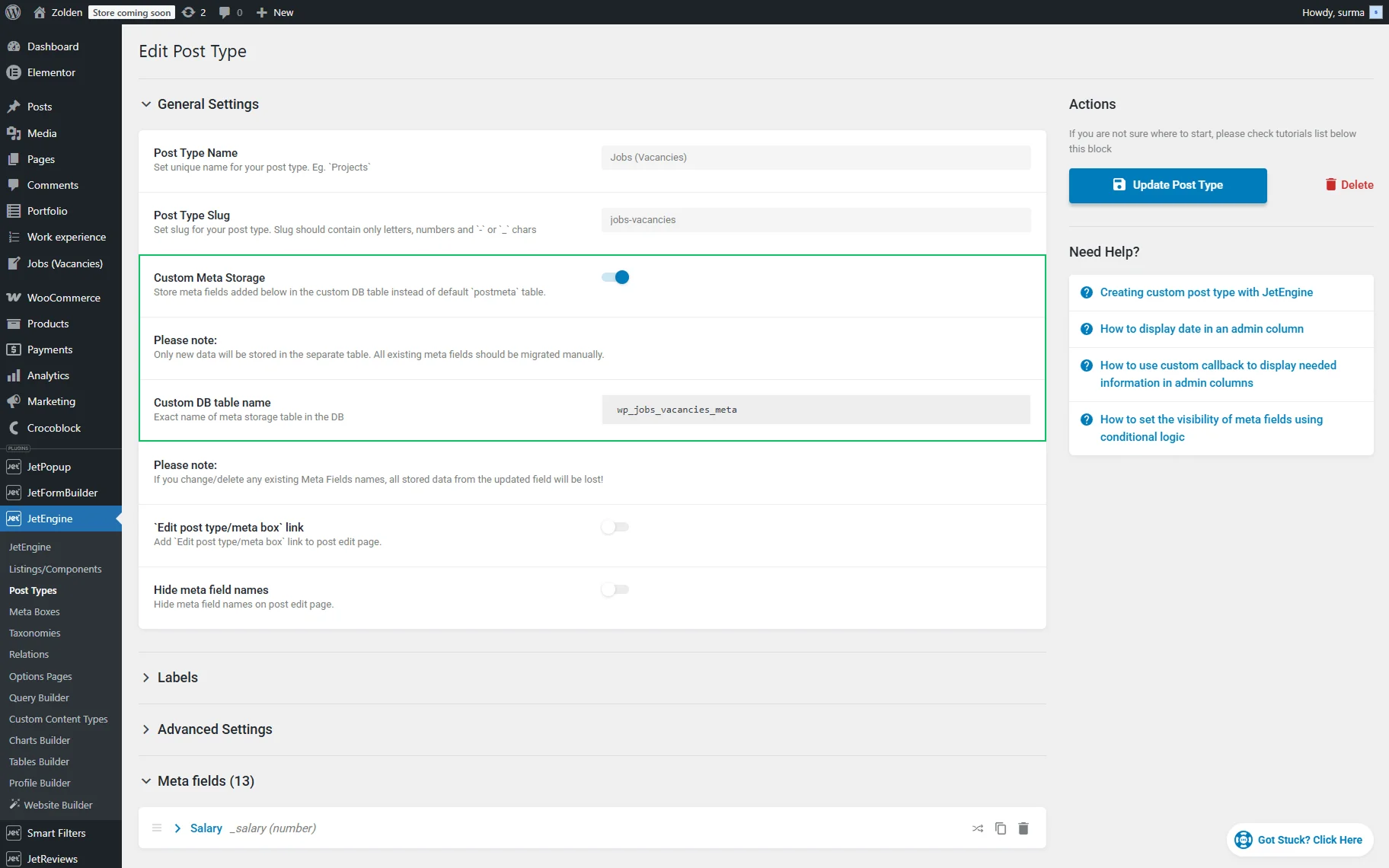
In this setup, meta fields are stored in a separate custom database table. Therefore, standard duplication plugins only duplicate data from wp_posts and wp_postmeta. As a result, meta fields stored via Custom Meta Storage are not duplicated automatically.
To duplicate such data, you will need to use alternative approaches, for example, exporting and importing content. For a detailed walkthrough, refer to the related How to Import Data to CCT, Custom Meta Storage, and Meta Box guide.
This approach ensures that all custom data is transferred correctly when working with advanced storage configurations.
Relations duplicating
Another issue you might face when duplicating posts or pages is that the Relations tied to the posts/pages are not copied as well. JetEngine relations are stored in separate database tables: jet_rel_default and jet_rel_default_meta. These tables are out of the scope of the duplication-plugins copy.
So, currently, it is not possible to duplicate JetEngine’s Relations, because the data is stored in a different table, while duplicators copy the post’s content and metadata.
JetThemeCore templates duplicating
Talking about the content, we usually mean the dynamic data pulled from posts, pages, and products. However, the JetThemeCore plugin provides the ability not only to create, but to duplicate the templates for pages, single posts, archives, and other types of pages.
To copy the whole template, proceed to WordPress Dashboard > Crocoblock > Theme Builder > Templates, and next to the needed template, click the three-dots icon. From the newly appeared pop-up, select the “Duplicate” option.
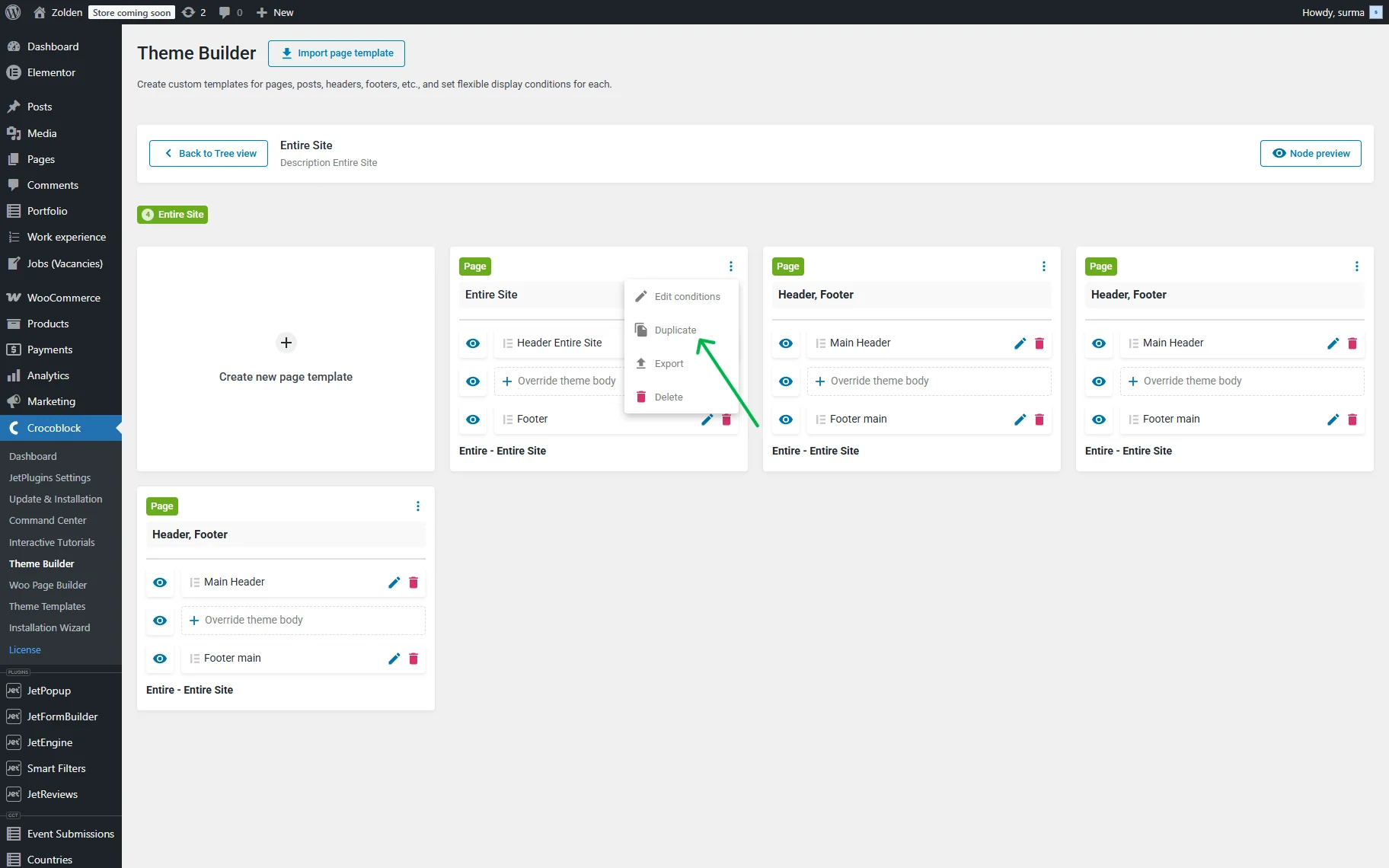
Once the “Duplication” option is clicked, a new copy of the selected template instantly appears in the list.
FAQ
Yes, you can duplicate a page or post manually using the Gutenberg or Elementor editor or by copying the code. However, these methods only copy the content and layout — they do not preserve metadata, SEO settings, or advanced configurations.
Yes, most duplication plugins copy custom fields and metadata if they are stored in the default WordPress table (wp_postmeta). This includes fields created with JetEngine.
JetEngine relations are stored in separate database tables, not in the post or its metadata. Since duplication plugins only copy post content and meta fields, relations are not included in the duplicated post.
Yes, JetEngine provides a built-in “Clone” option for duplicating CCT items. Standard WordPress duplication plugins do not work with CCT items because they are stored in custom database tables.
If the Custom Meta Storage option is enabled, meta fields are stored in a separate database table. In this case, duplication plugins cannot copy them automatically, and you may need to use import/export methods instead.
That’s it. Now you know how to duplicate WordPress pages, posts, custom post type posts, and CCT items while preserving their formatting and settings.