For today’s Made with Croco, we spoke with the team behind NaturalWeb Design, a distributed agency with roots in Latin America and Spain. Specializing in WordPress development and long-time fans of Crocoblock, they recently launched Boost MyCroco, a unique space made by and for the Crocoblock community.
It’s not their biggest project in terms of scale or budget. But in their own words, “it’s the one that came from the heart.”
Introduction
NaturalWeb Design is a remote WordPress agency with teams across Latin America and Spain. From the start, Crocoblock has been their go-to toolkit for client projects. Whether it’s a simple landing page or a complex web platform, JetPlugins have allowed them to deliver fully customized results.
Recently, they launched something that means a lot to them personally: Boost MyCroco. It’s a community platform for Crocoblock users — a space where people can connect, collaborate, offer help, and grow together.
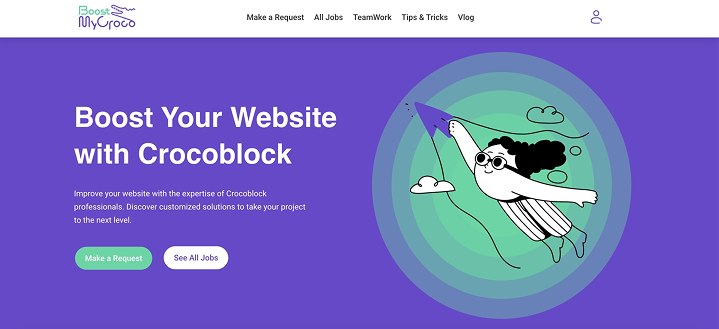
Why NaturalWeb Design Built Boost MyCroco
They’ve been active in the Crocoblock ecosystem for years — answering questions, joining groups, and sharing tips. Over time, they realized something: people were looking for more than just support. They wanted real collaboration.
Facebook groups and freelance platforms weren’t cutting it. What if there were a dedicated space where Crocoblock users could:
- get help from other users (free or paid);
- offer their services and build a profile;
- leave reviews and build trust;
- learn from shared experiences — all inside a custom dashboard?
That’s how Boost MyCroco was born.
The Challenges
The idea sounded simple. But making it happen… not so much.
First, they wanted to support both Spanish and English communities. Then came the logic of assigning help requests, managing visibility of sensitive information, and building a dynamic dashboard that could reflect a user’s role, activity, and permissions. All without custom code.
That last point was crucial. The team behind NaturalWeb Design wanted something anyone in the community could maintain, even if they weren’t developers.
The Crocoblock Power
Crocoblock was, without exaggeration, the only way they could build this. They used JetEngine to structure the entire platform. Every listing, relationship, and dashboard block was powered by dynamic meta fields and conditional visibility. The Custom Content Types (CCT) feature was especially powerful, allowing them to separate and structure requests, offers, feedback, and interactions cleanly.
With JetFormBuilder, they created over 25 forms, from submitting help requests to evaluating completed work. The dynamic visibility logic (e.g., “show this if assigned helper = current user”) allowed us to create a seamless, role-based experience.
The dashboard was a bit of a beast, honestly. It had to reflect each user’s real-time activity – ongoing threads, messages, ratings, even contributions to the public knowledge base. But JetEngine handled it.
Real-World Results
Today, BoostMyCroco is up and running. They’ve got over 200 users, dozens of active help requests each month, and new use cases emerging weekly. The platform works in both English and Spanish, and our community is already shaping its direction.
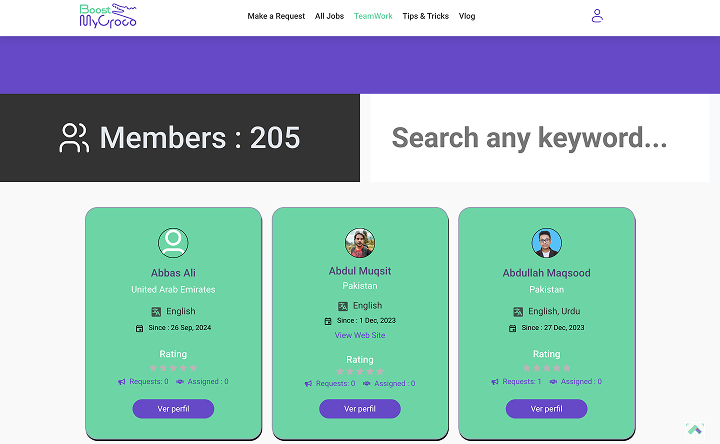
And most importantly? It’s sustainable. The logic is handled through Crocoblock’s visual tools, so their small team can keep it going and growing.
Briefly
They kept things as streamlined as possible:
- Editor: Elementor + JetEngine
- Forms: JetFormBuilder
- CRM: FluentCRM
- SEO: Rank Math
- Performance: Perfmatters
- Hosting: Elementor Hosting
- Team size: 4 people
- Organization tool: Notion
Advice for Fellow Developers
If you’re thinking of building something similar, the biggest tips are:
- Label everything. When you have 60+ fields and conditions, clear naming is essential.
- Understand your user flows first. Build wireframes and map logic before jumping into listings.
- Don’t be afraid to push JetEngine. It can do way more than most people realize.
And honestly? There’s something deeply rewarding about seeing your vision come to life, especially when you’ve built it with tools that anyone in the community can learn and use.
Final Thoughts
Boost MyCroco is a community project, but it’s also proof of what’s possible with Crocoblock. You don’t need a big team or a big budget. You just need clarity, patience, and the right tools.
And if you’re part of the Crocoblock world, this platform was made for you.