For years, Divi has been a powerhouse in the WordPress world, known for its incredible flexibility and all-in-one toolkit. But it also carried a reputation for performance issues and code bloat that could frustrate even its most loyal users. With the release of Divi 5, Elegant Themes promised a faster, leaner, and more modern builder that would finally put these concerns to rest.
But the question remains: does Divi help or hurt your SEO? After checking out various Reddit SEO threads and Quora SEO discussions, I’ve found the most interesting insights on how this popular page builder affects your website’s search engine performance. This article will help you decide whether Divi is the right choice for your SEO strategy in 2026.
Does Divi Affect SEO?
The short answer is yes, but not in the way you might think. Divi itself does not harm your SEO. In fact, it is built with many SEO-friendly features. However, like any page builder, how you use it makes all the difference.
powered by Divi-5 dynamic?
Performance issues in Divi 4
Historically, Divi 4 faced criticism for code bloat and slower page load times. The theme’s reliance on shortcodes and accumulated technical debt over a decade led to larger JavaScript files and CSS that could affect Core Web Vitals, Google’s key ranking metrics.
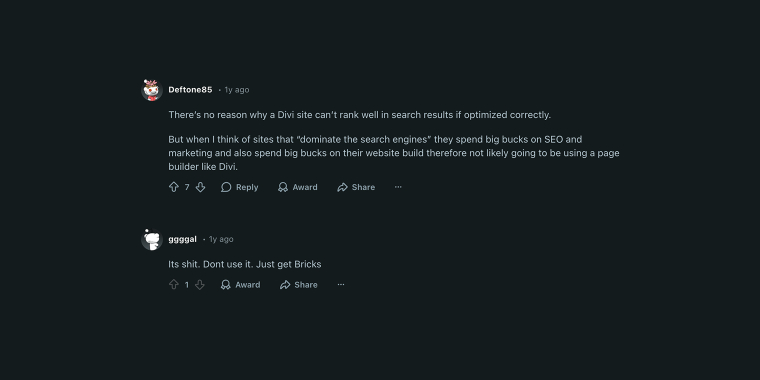
Sites built with Divi 4 often required additional optimization through caching plugins, CDNs, and image compression to achieve competitive load times. At the same time, the theme has many positive opinions that support the idea that a bad workman blames his tools.
The game-changer Divi 5
Divi 5 represents a complete ground-up rebuild designed specifically to address these performance concerns. The improvements are really impressive.
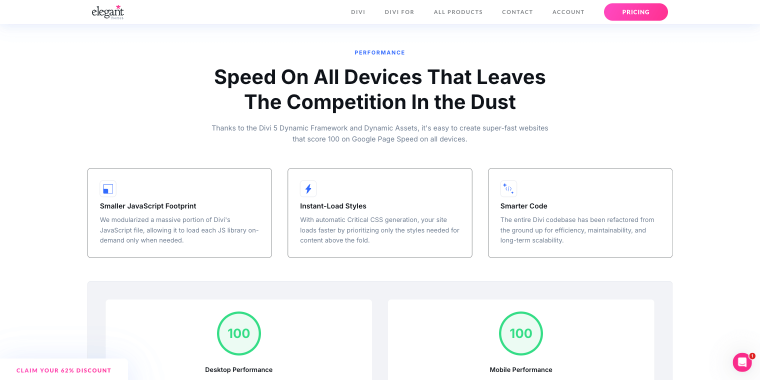
- JavaScript size reduced from 276kb to just 45kb, an 84% reduction;
- perfect 100 scores on Google PageSpeed Insights are now achievable out of the box;
- Largest Contentful Paint (LCP) consistently under 2.5 seconds;
- server rendering 2-4x faster than Divi 4;
- elimination of shortcode bloat through modern block-based storage.
These performance gains directly translate to better SEO. Faster load times mean lower bounce rates, higher user engagement, and improved rankings, all factors that Google’s algorithm rewards.
Divi Built-In SEO Features
While Divi does not include a comprehensive SEO suite like dedicated plugins, it does offer essential built-in SEO settings that provide a solid foundation. Divi includes SEO settings accessible through WordPress Dashboard > Divi > Theme Options > SEO tab, allowing you to:
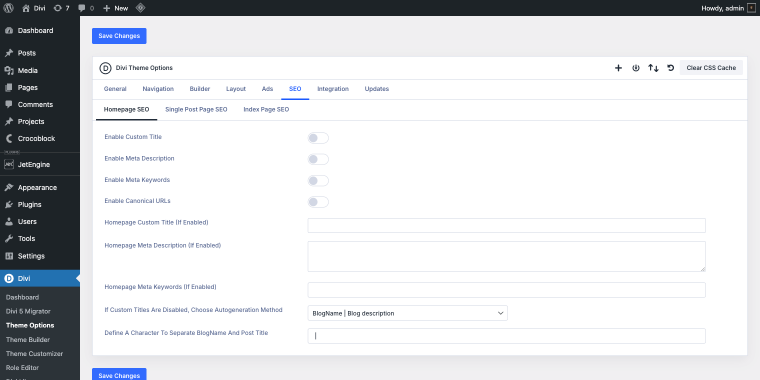
- set custom meta titles and descriptions for your homepage;
- enable canonical URLs to prevent duplicate content issues;
- configure single post and index page SEO settings;
- control how search engines index your content.
Semantic HTML and clean code
Divi 5 generates cleaner, more semantic HTML that search engines can easily crawl and understand. Properly using heading tags (H1, H2, H3) throughout the builder ensures your content structure is SEO-friendly, helping Google understand your content’s hierarchy and importance.
Mobile responsiveness
With Google mobile-first indexing, having a responsive website is non-negotiable. Divi excels here with built-in responsive design controls that allow you to customize layouts for desktop, tablet, and mobile devices. You can show or hide specific elements, adjust spacing, and optimize typography for each screen size, all crucial for mobile SEO performance.
Divi + Rank Math or Yoast
While Divi’s built-in SEO features provide a foundation, combining Divi with a dedicated SEO plugin unlocks the platform’s full potential. Rank Math and Yoast SEO are the two most popular choices, both offering deep integration with Divi.
Rank Math has become the go-to SEO plugin for Divi users in 2026, offering:
- direct integration within the Divi Visual Builder;
- real-time SEO analysis as you build;
- schema markup configuration;
- AI-powered content optimization suggestions;
- advanced snippet preview and editing;
- lightweight code that does not slow down your site.
Note that during the Divi 5 beta phase, some users reported temporary compatibility issues, which have largely been resolved as both platforms continue to mature.
Do Big Companies Use Divi?
Yes, and the list is more impressive than you might expect. While Divi is popular among small businesses and freelancers, several notable organizations trust the platform for their web presence. Most notable examples include:
PyData

PyData is sponsored by major tech companies, including Booking.com, ASML, Tesco, and eBay.
Manent Capital

Manent Capital is a boutique wealth management firm.
With over 3 million websites using Divi, it has proven reliable and scalable across diverse industries and use cases.
The Divi 5 Revolution: What Changed for SEO
Divi 5 is not an incremental update; it is a complete rebuild from scratch. This reset was designed to address core problems of speed, stability, and scalability at their source, creating what CEO Nick Roach describes as a foundational update for the next decade of the web.
Goodbye shortcode soup
One of Divi 4’s biggest SEO weaknesses was its reliance on shortcodes. If you switched themes, your content would turn into unreadable code, effectively locking you into the ecosystem. Shortcodes bloated the database and slowed the site. Divi 5 replaces this legacy system with modern, block-based storage similar to the Gutenberg editor. Your content is now cleaner, more portable, and significantly lighter, all of which positively impact SEO performance.
Professional-grade design system
While speed improvements grabbed headlines, Divi 5 also introduced sophisticated design capabilities that indirectly benefit SEO through improved user experience:
- global design variables for consistent branding;
- class-based presets for scalable design systems;
- modern CSS units and functions (rem, vw, vh, clamp);
- native Flexbox and CSS Grid support.
These features enable faster development of responsive, user-friendly designs that keep visitors engaged (a key ranking factor for search engines).
Potential SEO Drawbacks and How to Overcome Them
No platform is perfect, and Divi does have some considerations that require attention for optimal SEO performance.
The ecosystem catch-up period
Divi 5 remains in public beta, and the vast ecosystem of third-party plugins is adapting. Some popular extensions, including certain SEO tools, experienced temporary compatibility issues during the transition. Elegant Themes’ advice is clear: use Divi 5 for new projects, but wait to migrate existing sites that depend heavily on third-party extensions until compatibility is confirmed.
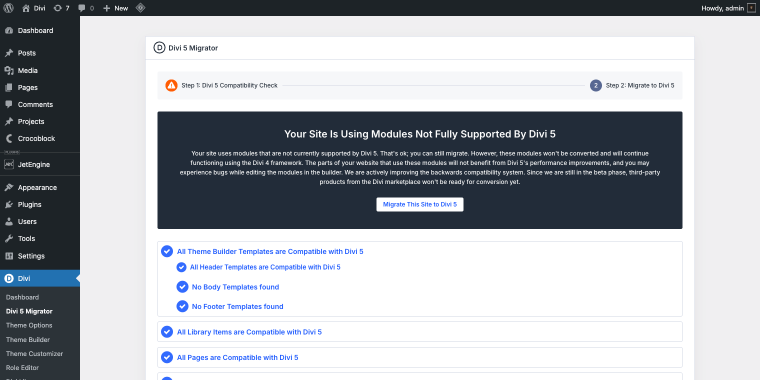
If you go to WordPress Dashboard > Divi > Divi 5 Migration, the built-in tool will analyze your website and summarize a list of improvements you need to make in order to go to version 5.
Module overload risk
Divi’s extensive module library is powerful but can tempt users to overload pages with unnecessary features. Too many animations, sliders, and complex modules can still slow down even the optimized Divi 5. The solution is discipline: use only modules that serve a genuine purpose, compress images strictly, and use lazy loading for off-screen content.
Hosting matters more than ever
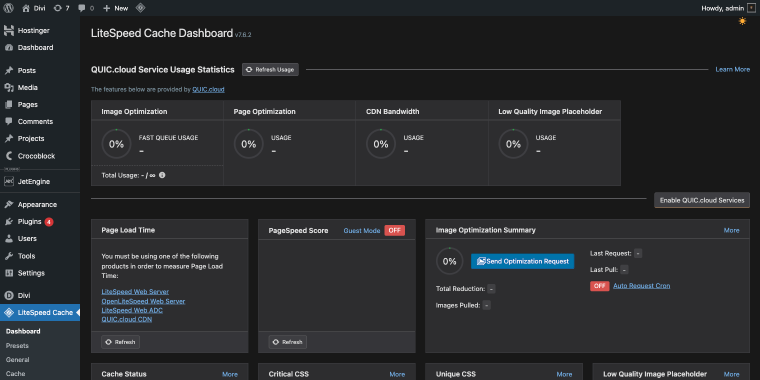
Although Divi 5 is significantly lighter, shared hosting can still struggle with feature-rich websites. For optimal performance and SEO, invest in quality managed WordPress hosting or a VPS. Pair this with a CDN for global content delivery and implement a robust caching strategy using plugins such as WP Rocket or LiteSpeed Cache.
Divi SEO Best Practices for 2026
To maximize your SEO results with Divi, follow these proven strategies:
Enable Divi performance features
Navigate to Divi > Theme Options > Builder > Advanced and enable:
- Dynamic CSS & JS (loads only what is needed);
- Critical CSS generation;
- Defer jQuery and remove unused CSS.
Optimize images aggressively
Use tools like ShortPixel or Imagify to compress images before upload. Enable lazy loading and serve images in next-gen formats such as WebP.
Structure content properly
Use only one H1 tag per page (typically your main title). Follow it with H2 and H3 tags in a logical hierarchy. Create a clear content architecture using Divi sections, rows, and modules to logically organize information.
Implement caching
Install a caching plugin, such as WP Rocket or W3 Total Cache. Enable browser caching and GZIP compression. Consider server-level caching through your hosting provider.
Go mobile-first
Test every layout in the Divi mobile view before publishing. Adjust text sizes, spacing, and module visibility for different screen sizes. Ensure all interactive elements are touch-friendly and easy to use on mobile devices.
Regular performance audits
Run monthly tests using Google PageSpeed Insights and GTmetrix. Monitor Core Web Vitals through Google Search Console. Address any performance warnings immediately before they affect rankings.
FAQ
No, Divi is not bad for SEO. While Divi 4 had performance issues, Divi 5 has addressed them with a complete rebuild that dramatically improves speed and code efficiency. When properly optimized with caching, image compression, and an SEO plugin like Rank Math, Divi can achieve excellent SEO performance, including perfect PageSpeed scores.
Divi 5 websites can achieve Largest Contentful Paint (LCP) under 2.5 seconds and perfect 100 scores on Google PageSpeed Insights. Actual speed depends on your hosting quality, image optimization, caching setup, and how you use Divi modules. With proper optimization, Divi 5 sites compete directly with lightweight themes.
Elegant Themes recommends using Divi 5 for new projects. For existing sites, especially those with extensive third-party plugins and custom code, wait until Divi 5 reaches stable release and all your critical extensions are confirmed compatible. Always back up your site before any major update and test in a staging environment first.
Conclusion
The verdict is clear: Divi, especially in its Divi 5 iteration, is a positive force for SEO when used correctly. The complete ground-up rebuild has transformed it from a flexible but heavyweight builder into a fast, modern platform that competes directly with performance-focused themes.
If you are building a new site or considering a platform switch, Divi 5 deserves serious consideration. If you are already using Divi 4, the upgrade path is clear, though timing depends on your specific plugins and customizations. Either way, the message is unmistakable: Divi is no longer the SEO liability it was once perceived to be. With proper implementation, it is an SEO asset that helps, rather than hurts, your website’s rankings.