I guess not only have I had this feeling for the past six months that I’m in a rabbit hole and some kind of Mirrorverse where I hear the same message echoing from every corner, saying just one word: “AI.” Actually, two words: “AI” and “Vibe coding.”
There are also two quite polarized groups – the first preaching AI with passion, worth early missionaries of all world religions, and the second is rather skeptical about the whole bubble or spread panic that robots will take all our jobs.
The interesting thing about all that is that it’s not only YouTubers or influencers who have such views, but corporate bosses as well – so some companies ended up firing whole departments in one day, especially in the USA, and some still haven’t integrated any AI tools in their processes.
But I really don’t want to circle near the same questions, like “Will AI kill WordPress?” or “Will AI take our jobs?”
This approach reminds me of the Luddite movement at the beginning of the Industrial Revolution, when English textile workers, fearing machines would replace them, started destroying the new equipment.
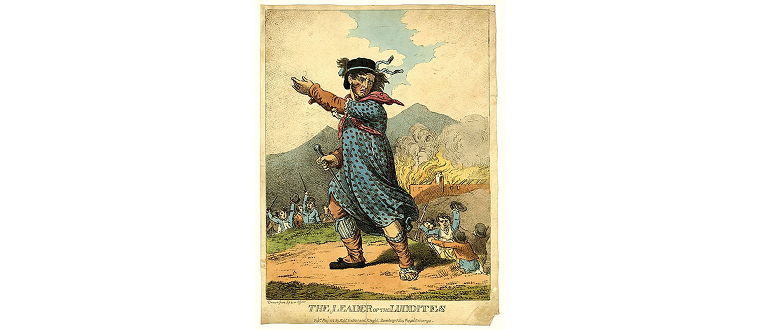
In reality, textile work didn’t disappear but evolved. The Industrial Revolution didn’t result in mass long-term unemployment, but it did create harsh working conditions. Over time, reforms like the Factory Act of 1833 began addressing issues such as child labor and excessive working hours.
And now we are here again, facing a new technological shift, asking the same questions in a different form.
Just like before, the tools are changing, the work is evolving, and the outcome will depend less on the technology itself and more on how we adapt to it. Not to mention, we’ve already gone through a massive shift with the rise of the Internet and smartphones.
Faster Building. But… For What?
So, the number one advantage of building with AI, as named by everyone, is speed. In 99% of all the articles, ads, or videos that promote or review a certain AI tool for website building, I hear this main advantage.
But my question is then – well, do we really need to make a website per day, and is it only the actual speed of execution that plays a role? There’ve been a lot of memes about meetings and how they take so much time, as well as client briefings, and so on.
So, let’s imagine the most effective and fast AI tool for websites and apps has been invented, and everyone can make one per day.
And then what? You’ve built the website in a day, but the client still hasn’t decided what colors they like. The copy is still waiting on someone from marketing, and the brand strategy is still not clear. The meetings are still happening. So actually, the building part was never really the slow part, but just the most visible one.
And here is where I want to ask another question. Even if you build a website in a day, even if you use different colors on A/B testing and AI-written copy, does speed alone guarantee that someone will actually read it? Attention spans seem to be getting shorter, traffic patterns are shifting, and people scroll faster than ever. So we build a thing fast, and then we add it to the ocean of millions of similar fast-built things, and we kind of just hope it gets noticed. I’m not sure if this is really a win, or just a new kind of challenge we haven’t fully thought through yet.
Maybe speed is great, but only when it solves a real problem. And maybe the real problem in 2026 is not so much “How fast can we build?” – because, honestly, we already build fast enough and so many of all kinds of things. Maybe the more interesting question would be “What are we even building, and for whom, and why?” But I want to come back to this later, because there’s more to unpack here than I can fit in one paragraph.
What about the attention span?
So the biggest battle on the modern web is for our attention. And every website is, in some way, a weapon in that battle. There is this famous claim that human attention spans dropped from 12 seconds in 2000 to 8 seconds today – shorter than a goldfish. You’ve probably seen it cited in countless marketing articles, including by sources like Amra&Elma. But here’s the catch: the original “8-second” figure came from a 2015 Microsoft Canada report, which itself cited an organization called Statistic Brain. And later investigations found that this data was actually fabricated.
What recent research actually shows is something more interesting: the amount of attention users give to content is based on relevance and motivation, not on some shrinking biological limit. So the real picture is that humans haven’t gotten dumber or more distracted. They’ve just become more ruthless about relevance. People will still read 5,000 words on something that genuinely matters to them, but they won’t give four seconds to something generic.
And this is exactly why all those claims about “build a website in minutes” and the constant obsession with production speed start to feel a bit off. Because if attention is given based on relevance, then producing more websites, faster, doesn’t really help anyone. It just adds more generic content into a world where generic content is precisely what people are scrolling past.
The AI Echo Сhamber and Model Collapse
No, it’s not about the AI collapse, but about a very real thing which we don’t fully see yet – because we are just in the beginning of this new era.
So, AI models are trained on the public web. But the public web, more and more every day, is filled with content that was itself generated by AI: landing pages, blog posts, code snippets, and design layouts. And then, the next generation of AI models is trained partly on this AI-generated content. And so on. It’s a loop.
Researchers have a name for what happens when this loop runs for too long – they call it “model collapse.” A 2024 paper in Nature showed that when AI models keep training on content produced by previous AI models, they slowly start to lose diversity. The lexical, syntactic, and semantic variety of their outputs goes down with each generation. There is even a darker nickname for this in the research community – “Habsburg AI,” named after the famous European royal family that inbred itself into genetic dysfunction.
And here is the part that I find really interesting. The research shows that in the early stage of this collapse, you don’t actually notice anything is wrong. The average output still looks fine, sometimes even better. What disappears first is the unusual stuff, such as the rare ideas, the strange phrasings, the regional accents, the niche aesthetics.
If you’ve ever felt that AI-generated landing pages are starting to look suspiciously similar – same gradient hero, same three-column features section, same friendly headline structure of “Bring your ideas to life / Build things without pain” – this is exactly what you’re seeing, as it’s the early phase of the loop.
Is the Design Process Killed by AI?
Jenny Wen, the Design Lead at Anthropic and former Director of Design at Figma, gave this speech at the Hatch Conference (and it seems to be her latest core idea), arguing that the design process is dead.
Let me give you a brief context: so, the concept of design thinking and particularly the design process has been a basis since the very early era of web design. To put it simply, the idea is that you research first, identify user personas, map their user journeys, understand their problems, and then find solutions to address those problems through your website, product, or application.
So, Jenny Wen claims that this approach is quite outdated as AI tools take over the market. Now, you don’t need to spend this much time on the design process – you can jump faster into making prototypes and tests, even as a designer, instead of just working on static wireframes and then polishing them further. And she says that people can actually rely on their intuition and taste when building prototypes.
And at this point, I had to react. Because intuition and visual taste – well, we all know those clients who, following their intuition, ask you to put pink text on a green background, this kind of thing… And I guess many designers and website developers have some projects they don’t put in their portfolio for a similar reason.
So, maybe a really good taste and intuition requires some skills and experience, and she definitely talks about people who built their intuition in the pre-AI era. Because such intuition is a deposit, not a skill you spawn with.
But here is the funny thing. When I listen to her speech, I notice that this idea sounds really fresh and almost revolutionary, but mostly for the world she comes from. Big tech, big design teams, big corporate processes – the kind of environment where one designer might spend months on a single feature, going through endless rounds of research, personas, stakeholder reviews, and then reviews of the reviews. In that world, yes, skipping half of it and jumping straight into prototyping feels like liberation.
But for small web design teams, freelancers, and small agencies, this has been the normal way of working for years. You talk to the client, you get a feeling for what they need, you start sketching, you show them something, you adjust. It has always been flexible and proactive, not because of AI, but because of reality.
Fast prototyping and WordPress
And here is where WordPress, ironically, sits in a very different place in this whole conversation. Because the WordPress world has been quietly doing fast prototyping with intuition for years already, just not with AI. With visual builders, you literally drag and drop elements on a live site, show the result to the client in the same call, adjust on the spot, and publish.
In many cases, building a working prototype in a visual builder is actually faster than prompting an AI, reading the output, fixing what it got wrong, and then deploying it as an MVP. And the result is already a real website on a real domain.
So when people talk about AI finally letting designers “build and ship their own ideas” – sure, in the corporate world of Figma handoffs and engineering tickets, that’s a real shift. But in the WordPress world, this has just been a routine for a long time.
Which brings us to the actual question worth asking: not “Is the design process dead?”, but this: when AI removes the slow part of building, what is left that actually matters?
Do Vibecoders Really Know About WordPress?
This question might sound a bit strange, as WordPress is the most popular CMS in the world, but we live in an information bubble world, and I can clearly see a whole generation of designers and developers who have formed their preferences and stack using new tools that were hyped when they got their education or in their community – it was a time of Squarespace, Wix, then Webflow and Framer. It’s like a hype around a podcast idea, while the whole concept has been there since radio was invented.
If you ask these designers about WordPress, they will probably tell you that it’s not that beautiful or that it might have security issues and plugin inconsistency bloat – exactly what Google and AI tell you about it, while it could be relevant maybe over 10 years ago.
At the same time, they are easily ready to pay not only for their SaaS platforms, but for basic (in WordPress terms) features the whole time their website is online, quite a big amount of money.
A simple example: in Webflow, to set up a form and collect data, you have to subscribe to the highest Site plan tier (when already paying for a Wordspace, separately) to be able to set up a simple form that supports file upload. But to store these files, you have to subscribe to a dedicated service, $80 a year, the cheapest plan.
So this dismissal of WordPress is not really based on a fair comparison. It’s often based on a vibe that something old must be worse than something new, and that something with a slick onboarding flow, frills, and paid Academy must be more capable than something with a humble free admin panel.
But here is where the actual market data gets really interesting, because it tells a story that almost nobody is reading correctly. According to W3Techs CMS statistics, WordPress is going through its first slight drop in its history. The headlines immediately said that AI is killing WordPress.
But when you look at the data, that’s not what happened at all. WordPress did not lose ground to a rival CMS. It lost a small portion of the market to no CMS at all, but to static, AI-generated pages that aren’t really websites in the traditional sense. They are landing pages, one-pagers, placeholder sites, the kind of thing that nobody updates, and most of them won’t even exist next year.
In other words, AI is not eating WordPress’s actual territory. It’s eating the cheap, low-effort floor of the market that was always going to be commoditized eventually, the part where nobody really needed a CMS in the first place. The serious WordPress work – content-heavy sites, eCommerce, membership platforms, sites that real businesses depend on for real revenue – that part of the market is not moving anywhere.
Has the demand for skills increased or decreased?
And this is exactly why the popular “anyone can build software now” narrative is so misleading. In practice, AI tools don’t close the gap between experts and amateurs but widen it. Because an expert can look at AI-generated output and see what’s broken, what’s insecure, what won’t scale, what will embarrass the client in three months. An amateur just sees something that looks finished and ships it.
The same logic, by the way, applies inside WordPress itself. Imagine a WordPress site built by someone who knows what they’re doing as a clean, fast, secure, long-living business asset.
And then a WordPress site built by someone who installed 47 random plugins from the marketplace. This is exactly the reason why WordPress is being attacked, and why those vulnerabilities come from plugins and not its core.
So when we compare WordPress and vibe coding, the more honest comparison is not really between the two tools. It’s between two kinds of people using them – those who know what they’re building and why, and those who are just chasing the latest stack because that’s what their feed told them is cool. Thus, the tool is not the problem, but the skill behind it is.
AI-generated sites, admin panels, and reinventing the wheel
Here is one thing that often gets lost in the whole vibe coding excitement. When someone builds a website from scratch with AI, they are not just building a website; they are also rebuilding, every single time, all the invisible things that make a website actually manageable. WordPress already has all of this, polished by twenty years of millions of people using it daily.
Just to make it visual:
| What you need | AI-generated site (vibe coded) | WordPress |
| Admin panel for the client | Build it yourself | ✅ Built-in |
| User accounts and permissions | Build it yourself | ✅ Built-in |
| Media library with image management | Build it yourself | ✅ Built-in |
| Content editor that non-tech people can use | Build it yourself | ✅ Built-in |
| Plugin ecosystem for new features | Doesn’t exist | ✅ 60,000+ plugins |
| SEO tools, forms, backups, security | Build it yourself or pay extra for SaaS | ✅ Free plugins available |
| Updates without breaking the site | You’re on your own | ✅ One-click updates |
| Client can edit the site without calling you | Almost never | ✅ The whole point |
So when we compare, I built a site in 30 minutes with AI vs I built a site in 2 hours on WordPress, we are usually comparing very different products. One is a static page that looks nice, but the client cannot really touch it, and to edit it myself, I will have to dive into code.
The other is a full content management system that any non-technical person can run on their own. Reinventing the admin panel from scratch, every time, just to avoid touching WordPress – well, this is the definition of reinventing the wheel. And the funny part is that most vibe-coded sites that actually need to be edited eventually end up plugging into (tadah!) some kind of CMS anyway.
AI-Built Websites and Security
Talking about vulnerabilities in AI-generated code: there is one part of the AI-website conversation that almost never makes it into cheerful promo videos – security. Because whilst AI tools are great at generating something that looks like a working website in minutes, the code underneath often has problems that nobody is checking.
According to research cited by the ACM, studies show that between 25% and 70% of AI-generated code contains vulnerabilities – things like SQL injection, exposed credentials, or broken authentication. Even at the lowest end of that range, that’s one in four AI-built sites with a real security issue.
In May 2025, two researchers, Matt Palmer and Kody Low, scanned 1,645 web apps that Lovable, one of the most popular vibe coding platforms, was actively showcasing on its own marketplace. They found that 170 of them, roughly one in ten, were leaking real user data: full names, email addresses, phone numbers, home addresses, financial information, and even API keys.
The reason this happens is actually quite simple. AI doesn’t understand why a security check exists. As research from Columbia University explains, AI models are optimized to make errors go away, and sometimes the easiest way to make an error go away is to remove the very validation step that was protecting the site in the first place. The model doesn’t see a “security wall,” but just sees a bug preventing the code from running.
The result is something almost ironic. As reported by Inc. magazine, AI-generated code is bringing back classic vulnerabilities, like SQL injection, directory traversal, and exposed API keys, that the web industry spent the last 20 years getting rid of. Attacks that were considered embarrassing in 2010 are showing up now, on brand-new sites, built by people who don’t even know these attacks exist.
The Hybrid Future: Vibe Coding Inside WordPress
So let’s wrap it up with something practical, not philosophical. After everything we’ve talked about, the real question is: how do you actually choose, in your everyday work, between vibe coding and WordPress? And do you even have to choose?
So here is a simple table that I’d actually use myself when starting a new project:
| Project type | What I’d actually do |
| Throwaway, placeholder, or one-pager landing page | – Vibe code: Claude Design/Claude code, Google Stitch, and HTML/CSS page – Ready templates on WordPress (can be AI-generated) |
| Small business with dynamic content | – WordPress + JetEngine – WordPress and JetEngine for the backend, and Lovable/Bolt or other tool for the front end |
| Custom application or unique product | Vibe code the prototype to validate the idea, but rewrite the actual codebase with humans before it goes live |
| Long-lived asset, content-heavy website | Definitely WordPress. The plugin ecosystem and admin panel are the whole point |
FAQ
It depends on what you’re building. Vibe coding is good for quick prototypes and throwaway landing pages, while WordPress is better for content-heavy sites, eCommerce, and long-term projects that need an admin panel and content updates.
No, but it will replace the cheapest part of the market, like basic brochure sites built from generic templates.
Not really, at least not without serious human review. Studies show that 25% to 70% of AI-generated code contains security vulnerabilities, and there have been real cases of vibe-coded apps leaking user data.
Yes, you can use AI inside WordPress websites, using MCP functionality. Also, you can use WordPress as a backend for your AI-generated front end using JetEngine’s REST API functionality. Read this use case of JetEngine + Lovable.
Website builders like Webflow or Wix are a closed SaaS platform where you pay monthly for everything, including basic features. WordPress is open source, self-hosted, and gives you full ownership of your code and data, usually at a fraction of the long-term cost.
Yes, just in a different way. You need enough skill to read what AI generates, spot mistakes, and understand what’s happening under the hood.
Takeaway
AI is not the villain, and WordPress is not the hero, or vice versa. They are both tools, and the real story is what people choose to do with them.
The biggest mistake right now is picking a stack based on what’s trending this month, instead of thinking about what the project actually needs over the next two or three years. The people who keep working successfully with AI are the ones who treat it as one tool in the toolbox, alongside WordPress, their own taste, and understanding what they’re building.
So knowing the right instruments and what they are capable of is a key here.